Showing posts with label biographies. Show all posts

Thursday, May 19, 2011

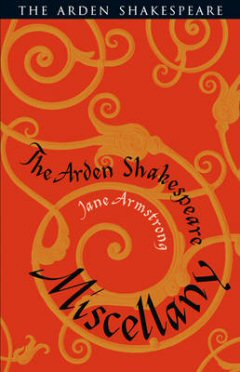
The Arden Shakespeare Miscellany by Jane Armstrong.


Lazing on the banks of the Avon a couple of years ago, the shadow of the Royal Shakespeare Theatre protecting my lily white skin from the early evening sun, I had two books for company: Jonathan Bate’s Soul of the Age and Penguin’s The Shakespeare Miscellany. Both had been invaluable as I travelled about the various historic buildings-cum-tourist attractions, but both were also bewilderingly complex, the Bate because of its sheer level of academic detail, the Penguin because its couple of hundred pages, modelled on the similar volumes from Ben Schott, pack its information in a seemingly random order. Fine for dipping into but its staccato style obscuring its treasures.

The Arden Shakespeare Miscellany sandwiches itself neatly in-between, bringing the academic authority of a series which isn’t afraid to describe itself as “the critical edition of Shakespeare” to a kind of deconstructed biography of the bard that manages to contain the Penguin’s wit and knowledge whilst simultaneously placing it within a readable structure. There are seven sections: his life, Elizabethan and Jacobean theatre, authorship, style, facts and figures, use of language and afterlife, with short single paged synopses of all the plays in the canon (which in keeping with Arden’s general mood include Sir Thomas More, Double Falsehood and Edward III) and box-outs on related elements like “rhetoric” or “stage directions”.

At first glance, there’s not much material in Jane Armstrong’s volume that can’t be found in other similar guides. But the devil (as he surprisingly didn’t say first) is in the detail, because each section digs deeper than most. The passages on authorship manage to introduce then convincingly dismiss most of the potential theories within a few paragraphs. This is the first time I’ve seen the ways in which he employed language, “hendiadys” or “anaphora” explained lucidly enough for me to understand. I can now tell when Hamlet says “To Be Or Not To Be” if he’s doing so from a Quarto or Folio text. Most extraordinarily the sorry tale of Charles and Mary Lamb is explained, full of the kind of madness and murder that powers the plays they would successfully adapt.

There are few weaknesses. Dotting the synopses through the volume printed on grey-hewed pages tends to break up the flow of the text and because they’re in alphabetical order are rarely relevant to the accompanying section (Macbeth is a rare example). The considerations of adaptations and the afterlife of Shakespeare lack passion and is a subject better dealt with in the Penguin which offers a greater sense of the theatrical history of the plays, through anecdotes and quotes from participants. Some of the lists feel like filler; although there’s a useful box containing all the words Shakespeare originally did or didn’t coin (such a shame that "kickie-wickie" didn’t enter the vocabulary) the role call of “Eminent Shakespeareans” has little substance beyond names and dates and lists of roles (Helen Mirren played Diana, but where not told when or for whom).

Yet despite that, of all volumes I’ve seen so far, this is the one I’d recommend to students and as a gift because it isn’t embarrassed to become technical when its required, because it’s inquisitive and causes the reader to become inquisitive and a genuine sense of being spoken to as an equal, of wanting to lead us through someone else fascination with the subject (it includes a list of the plants which would be perfect if one wanted to set up a Shakespearean garden). When you’ve read as many books about Shakespeare as I’d obsessed through this year, it’s easy to become jaded after hearing the same anecdotes over and again. What the Arden Shakespeare Miscellany demonstrates is that it just depends who’s writing.

The Arden Shakespeare Miscellany by Jane Armstrong is published by Methuen Drama. RRP: £9.99. ISBN: 9781408129104. Review copy supplied.

Friday, April 01, 2011

Shakespeare: Upstart Crow to Sweet Swan: The Evolution of His Image: 1592-1623 (Arden Shakespeare Library) by Katherine Duncan-Jones.


Ask any musician, author, artist or producer of a television science fiction franchise and they’ll tell you that some of their biggest fans are also their harshest critics who'll venerate them in the best of times but topple them when the work falls below expected standards, able to even more viciously highlight the flaws because of their volumous background knowledge. As Katherine Duncan-Jones’s enthralling page turner proves, this is not a new phenomena and even though Shakespeare has now risen to become a literary messiah, during his own lifetime, the man was just as much part of the theatrical rivalry that threaded throughout his peer group and beyond as some of the lesser known figures. As she says he had a “huge fan club” “out there”.

A prime example is John Weever, the poet and antiquary who on the one hand wrote sonnets venerating Shakespeare’s literary output but on the other heavily criticised his portrayal of Sir John Oldcastle (or Falstaff as the character’s name was later changed to after objections from the real person’s family and supporters). Duncan-Jones suggests Weever’s “responses to Shakespeare’s writings appear conflicted”. But his behaviour is entirely “fannish” in the modern sense, especially considering he also created Faunus and Melliflora, a lengthy poetic homage to Shakespeare’s own Venus and Adonis. The internet is now littered with similar endeavours. The book even includes an engraved portrait of Weever with his hand wresting on a skull.

By those standards, Henry Chettle could be considered an “uberfan”. Playwright and printer, Chettle was the alleged author of the “upstart crow” passage from Robert Greene's Groats-Worth of Wit (and the author provides ample evidence). He would go on to produce unauthorised copies of the plays, sometimes inserting his own passages (to the horror of later critics), like the (to quote Duncan-Jones) “charming scene 9, mostly in rhyming couplets, in which the lovers meet and plight their troth in Friar Lawrence’s cell”, before still later attaining a-list status by gaining Shakespeare’s aid in writing Sir Thomas More. Fans of television science fiction franchises will see some obvious parallels in Chettle’s rise.

The achievement of Duncan-Jones’s book is in choosing to focus on these lesser known figures and glancing at the “upstart crow” from their point of view rather than simply as supporting characters in the greater narrative of Shakespeare’s life. While her motive is to tease out parcels of information about his life story that have previously been overlooked, there are no biographies of Weaver available at Amazon, Bill Bryson isn’t beavering away on couple of hundred pages charting Chettle’s existence. The light shines on Shakespeare so brightly now that unlike similar literary figures the shadow he casts is long enough to blot out almost everyone else. Chettle rarely rates a few mentions in a typical biography of the bard.

To be fair to Bryson, Ackroyd et al, they’re working also within in a relatively populist field whereas, as part of the Arden series, Duncan-Jones’s is a very scholarly endevour. As the author warns in the preface, “some of this material is explored in rather minute detail, since it has not been much explored before” and a plentitude of research has clearly been undertaken, with allusions to historical events and other texts wrung out of single lines. The prologue spends twenty-six pages scrutinising an anecdote about a young boy killing a calf, arguing that it may be about young Shakespeare by amongst other effects listing all of the allusions to butchery in the plays. This is an intimidatingly dense text.

But what your left with is the sense that somehow Shakespeare was an even more complex figure than many writers give him credit for. Duncan-Jones convincingly demonstrates, even through the words of his critics, that far from simply writing the plays with acting as a sideline (simply?), an image that still persists, the “sweet swan” was as central a part of the performance end of the company as Burbage or Kemp and may even have played Prospero in the premiere performance of The Tempest, giving his final lines extra poignancy. That’s why it was the initial play in the first folio: it was the work that was still close to the public conscience at the time of his death. Even in 1623, publishers understood the importance of fan service.

Shakespeare: Upstart Crow to Sweet Swan: The Evolution of His Image: 1592-1623 (Arden Shakespeare Library) by Katherine Duncan-Jones is published by Methuen Drama. £55.00 hardback. ISBN: 9781408130148. Review copy supplied.

Tuesday, March 29, 2011

William Shakespeare (Usborne Young Reading Series 3) by Rosie Dickens.


The challenge of producing biographies of complex figures to younger audiences is demonstrated when writer Rosie Dickens has to tackle subject of William’s marriage to Anne. Dickens mentions that he seemed rather young to be married and that many thought she wasn’t the right match, but that they were in love, so much so that she might have inspired one of the sonnets. We’re then told that six months after the marriage, she gave birth, which is factually correct but of course, unavoidably might suggest to the reader that young Suzanna was born prematurely.

An inquisitive child, a Fred Savage in The Princess Bride type, would have all sorts of questions. But perhaps that’s fitting considering how much of Shakespeare’s life is a mystery, how a man whose grammar school education was curtailed managed to write himself and collaborate on over forty plays. The book is also relatively ambiguous on that point too with a suggestion William joined some travelling players who were passing through (having seen a similar group with his father as a child) but a note in the back to explain that no one really knows.

Having offered readers the chance to discover the stories behind the plays in series two, Usborne's series three presents “readers who are ready for longer stories” with a fictionalised account of Shakespeare’s life from schoolboy to oblivion, covering all the main points, the theatres, the career, playing for the queen, the plagues and quite surprisingly Essex’s protest production of Richard II and the destruction of the Globe. Throughout the book is sumptuously illustrated with photographs and paintings by Christa Unzner who brings a characatured Roald Dahl element to the story.

Mostly Dickens's work reads like a Target novelisation of John Mortimer’s Will Shakespeare with the homoerotic tension removed. Like that tv series, once William reaches London, there’s a real sense of the camaraderie amongst the plays, mainly Burbage and Kemp as they sit about like Enid Blyton characters trying to decide what they should do when life's knocks come their way, including the ingenious plan to dismantle the theatre and ship it across the Thames to become the Globe. Dickens also doesn’t shy away the darker elements of the period, the traitors heads piked on the entrance to the capital.

The book closes with a summary of William’s life, the aforementioned note about the omissions, a list of his works, or at least what the author considers the highlights (not Love’s Labour’s Lost apparently) and an index which is a useful addition even if important figures are included using their christian name rather than surname (Anne Hathaway appearing first). But all of that is to churlishly criticise a remarkable achievement in, like the Templar book, bringing a version of the life of Shakespeare to a young audience, who should be eager to learn more.

Young Reading Series 3: William Shakespeare (illustated by Christa Unzner) is published by Usborne. £4.99. ISBN: 9780746090022. Review copy supplied.

Monday, March 28, 2011

The Life and Times of William Shakespeare (Notebook Series) by Ari Berk and Kristen McDermott.


The conceit behind this handsome volume is that in 1613, Shakespeare having written his final play, The Tempest, has decided to return to the country and compile a lavish scrapbook as a present for his daughter Judith, so that they look back on his life and work together. He describes for her his early childhood in Stratford, his move to London, his successes, the themes he’s interested in, and his friends, sanitising slightly the saltier aspects in that way a father might to even a twentysomething progeny who barely knows him, a tone which is about right for a book designed for older children.

Kristen McDermott and Ari Berk create a Shakespeare who wouldn’t seem out of place in one of his own plays. As the publisher’s note explains, they’ve deliberately laced the fiction with phrases from the canon and for the most part he speaks in the language of an in-costume tour guide at a tourist attraction, expositional without quite seeming like a real person. Once we accept this artifice the approach works very well and the authors do have some fun allowing adult readers to glance between the lines and what isn't mentioned because it’s not for young ears.

The design is perfect for children with an explorer instinct, a prefusion, even confusion of colourful illustrations and various flaps filled with even more information once opened, usually small books containing a synopsis of a play or contemporary knowledge and letters. The approach is similar to the RSC’s immortal Shakespeare: The Life, the Works, the Treasures which collects reproductions of the original documentation of the playwright hatches, matches and dispatches, but quite rightly for this audience the copperplate handwriting has been replaced with for the most part modern spelling and a clearer font.

It’s this surrounding material which really sells the book. We’re given recipes for stomach curdling dishes containing more dairy and sugar than seems fit for human consumption, gossipy biographies of courtiers to James I and there’s even a guide for young playgoers on the best etiquette for visiting the Globe, most of which is just as valid now. The biggest surprise is the willingness to use illustrative text from Shakespeare’s contemporaries rather than simply focusing on the cliches. Thomas Heyward’s The Four Prentices of London is quoted on the topic of avoiding work.

This life and times of William Shakespeare is perfect for the inquisitive child who wants to know more about the bard, perhaps having watched Shakespeare in Love or Doctor Who’s The Shakespeare Code, but too young for a proper full blown biography. It’s the romantic vision, a Wittington-like story of the son of a glove-maker heading to London to seek his fortune. Perhaps if I’d been given this book before venturing into the plays in secondary school, I might not have been quite so overawed. The fourteen year old version of me never quite appreciated Julius Caesar.

Ari Berk's website has an illustrative video.

The Life and Times of William Shakespeare (Notebook Series) by Ari Berk and Kristen McDermott is published by Templar. £14.99. ISBN: ISBN 978 1 84011 158. Review copy supplied.